
3D Scanning & Reverse Engineering Services in Iowa
Calmo Engineering helps turn physical parts into usable CAD models, drawings, inspection data, and manufacturable components. If you have a part but no print, no CAD file, or an outdated design, we can help create the digital data needed to move forward.
From Physical Part to Usable Manufacturing Data
3D scanning helps capture real-world part geometry, while reverse engineering turns that scan data into CAD models, drawings, and files that can actually be used for manufacturing.

3D Scanning Hardware
We use professional 3D scanning equipment to capture complex shapes, part geometry, mounting locations, contours, and surfaces that are difficult to measure by hand.
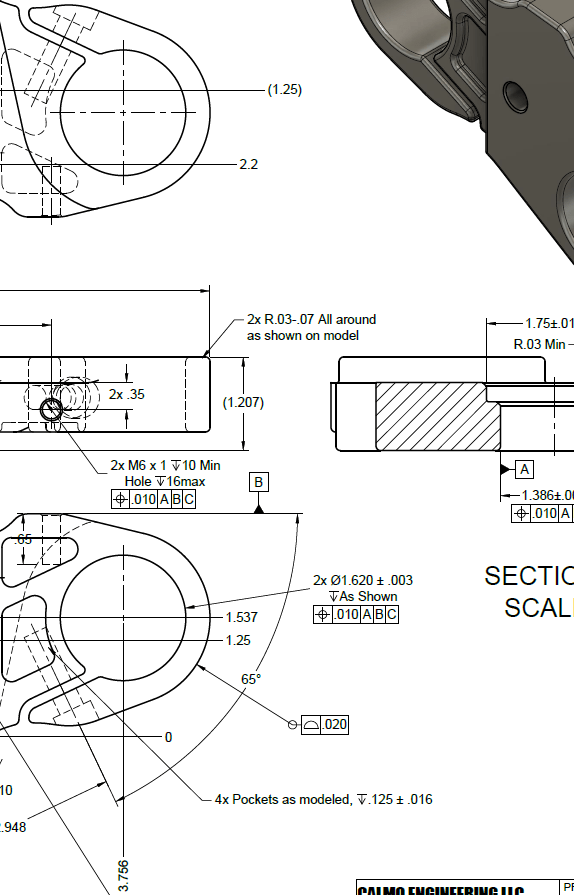
Scan-to-CAD & Drawing Support
Scan data can be used as the starting point for clean CAD models, drawings, modified designs, inspection references, and manufacturable replacement parts.
Turn Physical Parts Into Usable CAD Data
Many real-world parts do not have a good drawing or model available. Sometimes the original supplier is gone, the part has been modified over time, or the only thing available is the physical component sitting in your hand. 3D scanning and reverse engineering can bridge that gap.
Calmo Engineering uses 3D scanning, measurement, CAD modeling, and manufacturing experience to help customers recreate, modify, inspect, or improve existing parts.
- Reverse engineering obsolete parts
- Creating CAD from a physical sample
- Scan-to-CAD modeling
- Creating STEP files from existing components
- Making drawings from sample parts
- Modifying or improving an existing design
- Inspection and comparison work
- Preparing parts for CNC machining
- Capturing complex curved geometry
- Repair and replacement part development
- Powersports and motorsports components
- Industrial and manufacturing parts
What 3D Scanning Is Used For
3D scanning is useful when a part has geometry that is difficult to measure by hand, when no drawing exists, or when a digital model is needed for manufacturing, inspection, or redesign.
Reverse Engineering
Convert a physical part into CAD data that can be edited, measured, documented, or used for manufacturing.
Replacement Parts
Recreate unavailable, obsolete, damaged, or custom components when the original drawing or supplier is not available.
Design Modification
Scan an existing part, then adjust mounting points, geometry, thickness, spacing, clearances, or other design features.
Fitment & Clearance
Capture surrounding geometry or mating parts to help design components that fit correctly in the real assembly.
Inspection & Comparison
Compare scanned geometry against a CAD model or known reference to better understand variation, wear, or fitment issues.
Manufacturing Prep
Use scanned data as a starting point for a clean CAD model, drawing, prototype, CNC machined part, or production-ready design.
Available 3D Scanning and Reverse Engineering Deliverables
Not every scanning project needs the same final output. Some customers only need a scan mesh, while others need a clean solid model, 2D drawing, or finished CNC machined replacement part.
Raw or Cleaned Scan Data
STL or mesh data for reference, fitment, archiving, visualization, or downstream design work.
Reverse-Engineered CAD
STEP or SolidWorks models rebuilt from scan data and measurements for editing, quoting, machining, or documentation.
2D Drawings
Drawings created from a reverse-engineered model when dimensions, tolerances, and repeat manufacturing documentation are needed.
Scan-to-CAD Comparison
Inspection-style comparison between scanned geometry and CAD reference data to evaluate differences or confirm fit.
Modified Design Files
Updated CAD models based on the original part, with changes made for fitment, strength, manufacturability, or new requirements.
Finished Machined Parts
When the project calls for it, we can use the reverse-engineered model to quote CNC machined prototypes or short-run parts.
Our 3D Scanning Process
A good reverse engineering job is more than just scanning a part. The scan is only one step. The real value comes from turning that data into something useful for design, inspection, or manufacturing.
Review the Part
We review photos, size, material, condition, project goals, and the final file or part you need.
Scan & Measure
The part is scanned and measured to capture important geometry, mounting points, surfaces, and functional features.
Build the CAD
Scan data is used as a reference to create clean CAD geometry, drawings, or modified design files as needed.
Deliver or Manufacture
We provide the final files or quote the finished component if the goal is to produce a machined replacement or prototype.
Best-Fit Parts for 3D Scanning
3D scanning is especially useful for parts with complex shapes, curved surfaces, worn features, unknown geometry, or missing documentation.
- Obsolete machine parts
- Castings and housings
- Brackets and mounts
- Covers and guards
- Fixtures and tooling
- Motorcycle and powersports parts
- Industrial replacement parts
- Plastic, aluminum, and steel components
- Parts with organic or curved surfaces
- Parts with no print or CAD file
- Components needing design changes
- Assemblies needing fitment reference data
3D Scanning With Manufacturing in Mind
A scan file alone does not always solve the problem. If the final goal is to make a part, the model needs to be built in a way that makes sense for machining, fabrication, inspection, or future revisions.
Calmo Engineering combines 3D scanning with CAD/CAM and CNC machining experience. That means we can help decide when a project needs a direct scan mesh, when it needs a clean parametric CAD model, and when certain features should be simplified or adjusted for practical manufacturing.
Scan Data
Useful for capturing real-world geometry, visual reference, fitment checks, and complex shapes.
CAD Modeling
Useful for clean design intent, editable features, drawings, revisions, and manufacturable geometry.
CNC Machining
Useful when the end goal is a finished prototype, replacement part, fixture, or short-run production component.
What to Include With Your Quote Request
The most important thing is understanding what you need at the end of the project. A scan mesh, a CAD file, a drawing, and a finished machined part are different deliverables.
- Photos of the part
- Approximate size
- Material, if known
- Whether the part is complete or damaged
- What file type you need: STL, STEP, SolidWorks, drawing, or other
- Whether the goal is reproduction, modification, inspection, or fitment
- Any critical dimensions or mating features
- Whether you also need the finished part manufactured
3D Scanning Services Near Waterloo, Cedar Falls, and Across Iowa
Calmo Engineering is located in Evansdale, Iowa and serves customers in Waterloo, Cedar Falls, and throughout the state. We also work with out-of-area customers who can ship parts or provide project photos for review.
If you have a part but no drawing, no CAD file, or no easy way to reproduce it, send photos and explain what you need the final file or finished part to do.
3D Scanning & Reverse Engineering FAQs
Can you scan a part if I do not have a drawing?
Yes. That is one of the main reasons to use 3D scanning and reverse engineering. A physical sample can often be used to create scan data, CAD models, drawings, or replacement part geometry.
Is a 3D scan the same as a CAD model?
No. A scan typically creates mesh data, while a CAD model is rebuilt geometry that is easier to edit, dimension, machine, and document. Many manufacturing projects need scan-to-CAD work, not just a raw scan file.
What file types can you provide?
Depending on the project, deliverables may include STL mesh files, STEP files, SolidWorks models, 2D drawings, or files prepared for quoting and manufacturing.
Can you modify the part after scanning it?
Yes. We can use the scanned part as a reference and make design changes for fitment, strength, clearance, mounting, manufacturability, or updated requirements.
Can you machine the part after reverse engineering it?
In many cases, yes. If the part is practical for CNC machining, we can use the reverse-engineered model to quote a prototype, replacement part, or short production run.
How accurate is 3D scanning?
Accuracy depends on the part size, surface, geometry, setup, and final deliverable. For precision features, scan data is often combined with direct measurement and CAD modeling to create a more useful manufacturing file.
Have a Part But No CAD File?
Send photos of the part, the approximate size, and what you need at the end of the project. We can help determine whether you need a scan mesh, reverse-engineered CAD model, drawing, inspection comparison, or finished machined component.
Request a 3D Scanning Quote